fathimathulhafsanapp@gmail.com -

Author name: fathimathulhafsanapp@gmail.com

Analytics and Performance
Uncategorized

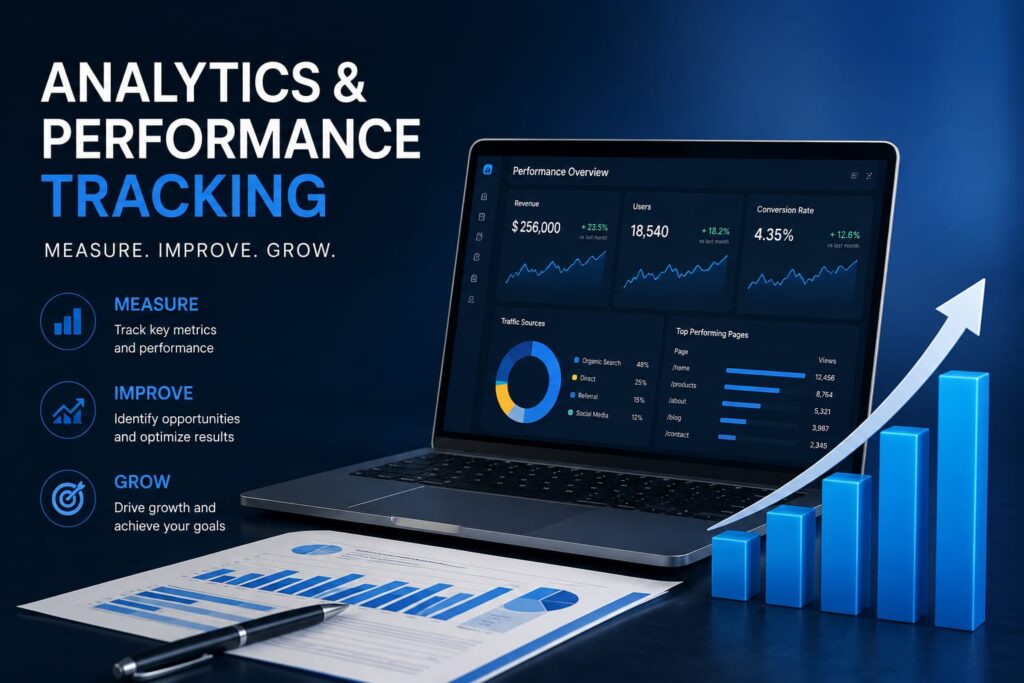
Analytics and Performance Tracking: Measure, Improve and Grow

Analytics and Performance Tracking: Measure, Improve, and Grow Part 1: Understanding Analytics and Why It Matters Introduction In today’s fast-paced digital landscape, businesses have access to more customer data than ever before. Every website visit, social media interaction, email click, online purchase, and advertisement engagement generates valuable information. While collecting data is relatively easy, the real challenge lies in understanding what that data means and using it to improve business performance. This is where analytics and performance tracking become essential. Analytics and performance tracking empower businesses to make informed decisions based on measurable insights rather than assumptions. Whether you’re running a small local business, an eCommerce store, or a global enterprise, understanding how your digital marketing efforts perform is crucial for long-term success. By measuring key metrics, identifying trends, and optimizing strategies, businesses can improve customer experiences, increase conversions, reduce marketing costs, and achieve sustainable growth. Today’s digital consumers expect personalized experiences, fast-loading websites, relevant content, and seamless online interactions. Businesses that monitor customer behavior and adapt their marketing strategies accordingly are better positioned to meet these expectations. Instead of relying on guesswork, analytics provides the evidence needed to understand what works, what doesn’t, and where improvements can be made. In this comprehensive guide, you’ll learn how analytics and performance tracking help businesses measure success, optimize marketing campaigns, and drive continuous growth. We’ll explore essential metrics, powerful analytics tools, best practices, and practical strategies that transform raw data into meaningful business results. What Is Analytics? Analytics is the process of collecting, measuring, organizing, and interpreting data generated by users interacting with your digital platforms. This includes websites, mobile applications, search engines, social media channels, email campaigns, online advertisements, and eCommerce stores. Every digital interaction leaves behind useful information. Analytics helps businesses answer important questions such as: Instead of making decisions based on assumptions, analytics provides reliable evidence that helps businesses improve their digital marketing strategies. Analytics is not just about numbers. It is about understanding customer behavior, identifying opportunities, and creating better experiences that encourage engagement and conversions. What Is Performance Tracking? Performance tracking is the continuous process of monitoring business goals and marketing activities using measurable data. It focuses on evaluating whether campaigns, websites, and marketing channels are achieving their intended objectives. Performance tracking answers questions like: Tracking performance consistently enables businesses to identify successful strategies while quickly recognizing areas that need improvement. Unlike one-time reporting, performance tracking is an ongoing process. Regular analysis helps businesses adapt to changing customer behavior, market trends, and evolving business goals. Why Analytics Matters for Business Growth Analytics and Performance Businesses today compete in an environment where customer expectations continue to rise. Marketing budgets must produce measurable results, and every investment should contribute to business growth. Analytics provides the information needed to make smarter decisions. Better Decision-Making Analytics and Performance Successful businesses rely on facts rather than assumptions. Analytics helps business owners and marketers understand exactly how their campaigns perform, allowing them to make informed strategic decisions. Instead of guessing which marketing channels work best, analytics identifies where leads, sales, and revenue originate. This reduces unnecessary spending while improving overall marketing efficiency. Understanding Customer Behavior Analytics and Performance One of analytics’ greatest strengths is its ability to reveal customer behavior. Businesses can understand: Understanding these behaviors allows businesses to create more personalized marketing experiences. Improving Customer Experience Analytics and Performance Customer experience directly influences sales and brand reputation. Analytics identifies problems that negatively impact users, including: Fixing these issues improves satisfaction while increasing conversion rates. Increasing Marketing Efficiency Analytics and Performance Every marketing campaign requires time and budget. Without analytics, businesses may continue investing in campaigns that fail to deliver results. Performance tracking helps marketers identify: This allows marketing budgets to be allocated more efficiently. Supporting Long-Term Growth Analytics and Performance Businesses that consistently monitor data can adapt faster than competitors. Rather than reacting after problems occur, analytics enables proactive decision-making. Over time, this leads to: The Difference Between Data and Insights Analytics and Performance Many businesses collect large amounts of data but struggle to transform it into meaningful insights. Data consists of raw numbers such as: While useful, these numbers alone do not explain why certain results occurred. Insights provide context. For example: Insights help businesses understand the reasons behind performance and identify opportunities for improvement. The ultimate goal of analytics is not simply collecting information but turning that information into actionable strategies. Building a Data-Driven Business Culture Analytics and Performance Organizations that embrace analytics develop a culture of continuous improvement. Rather than relying on opinions, decisions are based on measurable evidence. Marketing teams can evaluate campaign performance, sales teams can identify lead sources, customer support teams can understand common user issues, and business leaders can confidently invest in strategies backed by reliable data. A data-driven culture also encourages experimentation. Businesses can test new ideas, measure outcomes, and refine strategies without unnecessary risk. This continuous cycle of measuring, learning, and improving helps organizations stay competitive in an ever-changing digital environment. Companies that prioritize analytics are better equipped to respond to market trends, understand customer expectations, and achieve long-term success. Instead of reacting to changes, they use data to anticipate opportunities, improve decision-making, and build stronger relationships with their customers. Key Metrics, Analytics Tools, and Performance Measurement Analytics and Performance Understanding the importance of analytics is only the first step. To make informed business decisions, you need to measure the right metrics and use reliable tools to collect accurate data. Tracking meaningful Key Performance Indicators (KPIs) helps you evaluate whether your digital marketing efforts are moving your business closer to its goals. By focusing on actionable insights rather than vanity metrics, businesses can improve campaign performance, optimize marketing budgets, and deliver better customer experiences. Key Performance Indicators (KPIs) Every Business Should Track Analytics and Performance KPIs are measurable values that indicate how effectively your business is achieving specific objectives. Selecting the right KPIs depends on your business goals, but several metrics are essential for almost every digital marketing strategy. Website Traffic Analytics
Digital Marketing Services
Uncategorized

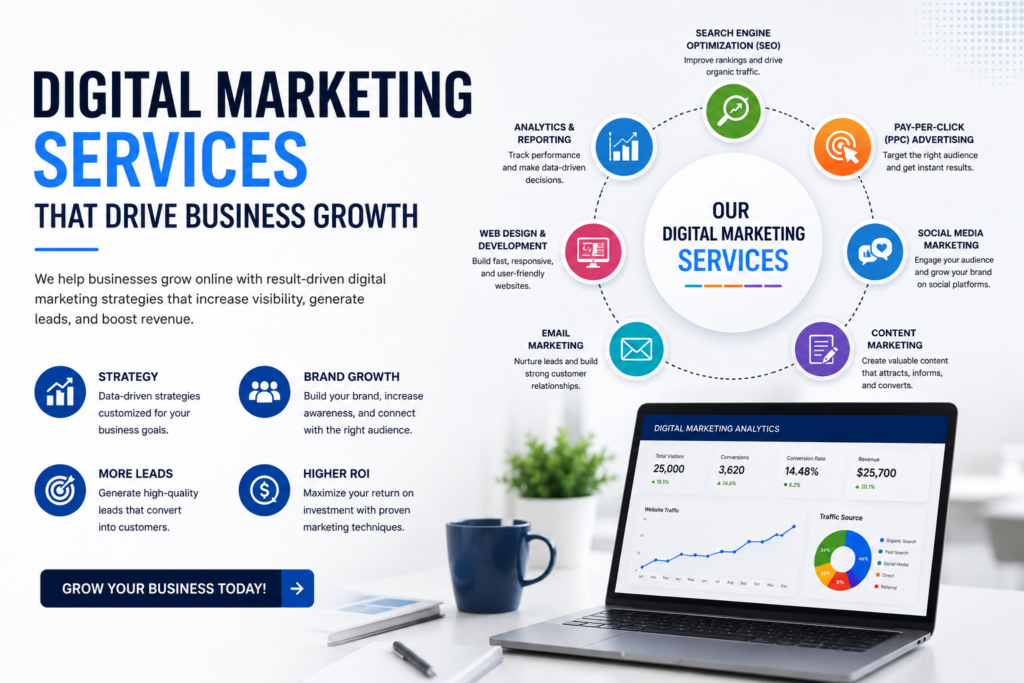
Digital Marketing Services That Drive Business Growth

Understanding Digital Marketing and the Core Services That Fuel Success Digital Marketing Services Introduction In today’s digital-first world, businesses need more than just a website to succeed. Consumers search for products online, compare brands on social media, read customer reviews, and make purchasing decisions based on their digital experiences. Whether you’re a startup, a small business, or a well-established company, having a strong online presence is essential for attracting customers and staying competitive. Digital marketing has become one of the most effective ways to reach target audiences, build brand awareness, generate qualified leads, and increase revenue. Unlike traditional marketing methods, digital marketing provides measurable results, allowing businesses to monitor performance, optimize campaigns, and maximize their return on investment (ROI). However, successful digital marketing isn’t about relying on a single strategy. It combines multiple services that work together to create a seamless customer journey—from attracting potential customers to converting them into loyal clients. Search Engine Optimization (SEO), Pay-Per-Click (PPC) advertising, Social Media Marketing (SMM), and Content Marketing are among the core services that help businesses grow in today’s competitive marketplace. This guide explores the essential digital marketing services that drive business growth, explaining how each one contributes to increasing visibility, generating leads, and improving customer engagement. By understanding these services, businesses can develop a well-rounded marketing strategy that delivers long-term success. What Are Digital Marketing Services? Digital Marketing Services Digital marketing services are a collection of online marketing strategies and techniques designed to promote a business, attract potential customers, and increase sales through digital channels. These channels include search engines, websites, social media platforms, email, mobile applications, and online advertising networks. Unlike traditional marketing, digital marketing allows businesses to target specific audiences based on demographics, interests, online behavior, and location. This level of precision helps reduce wasted advertising spend while improving campaign performance. A successful digital marketing strategy focuses on connecting with customers throughout every stage of their buying journey. From the moment someone searches for information online to the point they make a purchase and become a repeat customer, digital marketing ensures businesses remain visible, relevant, and engaging. Why Digital Marketing Is Essential for Business Growth Digital Marketing Services Consumer behavior has changed dramatically over the past decade. Before purchasing a product or service, most customers conduct online research, compare competitors, read reviews, and explore social media profiles. Businesses that fail to establish a strong digital presence risk losing potential customers to competitors who are easier to find online. Digital marketing provides several key advantages: By investing in digital marketing, businesses can create meaningful customer relationships while improving visibility, credibility, and profitability. Search Engine Optimization (SEO) Digital Marketing Services Search Engine Optimization (SEO) is one of the most valuable digital marketing services because it helps businesses increase their visibility in search engine results. When potential customers search for products or services related to your business, SEO improves the chances of your website appearing near the top of search results. SEO involves optimizing various aspects of a website, including content, keywords, page structure, technical performance, mobile responsiveness, and backlinks. Search engines reward websites that provide high-quality, relevant, and user-friendly experiences. The benefits of SEO include: Although SEO requires patience, it delivers sustainable growth by consistently attracting users who are actively searching for your products or services. Pay-Per-Click (PPC) Advertising Digital Marketing Services While SEO focuses on long-term growth, Pay-Per-Click (PPC) advertising provides immediate visibility. PPC campaigns display advertisements on search engines and other digital platforms, allowing businesses to reach potential customers instantly. With PPC advertising, businesses only pay when someone clicks on their advertisement, making it a highly measurable and controllable marketing strategy. Effective PPC campaigns involve: One of the biggest advantages of PPC is speed. Businesses can launch campaigns quickly, attract qualified traffic, and generate leads within hours of going live. Combined with ongoing optimization, PPC can deliver impressive returns on investment while supporting product launches, seasonal promotions, and lead generation campaigns. Social Media Marketing (SMM) Digital Marketing Services Social media has become an essential part of everyday life, making it one of the most powerful channels for connecting with customers. Platforms such as Facebook, Instagram, LinkedIn, X, Pinterest, and YouTube allow businesses to build relationships, increase brand awareness, and engage directly with their audiences. Social Media Marketing goes beyond simply posting content. A successful strategy includes audience research, content planning, community management, paid advertising, and performance analysis. Businesses use social media to: Consistent engagement helps businesses establish trust while encouraging customers to interact with the brand, share content, and recommend products or services to others. Content Marketing Digital Marketing Services Content is the foundation of every successful digital marketing strategy. High-quality content educates, informs, and inspires potential customers while positioning your business as an authority in your industry. Content marketing includes: Instead of directly selling products, content marketing focuses on solving customer problems and answering their questions. This approach builds trust, improves search engine rankings, and encourages long-term customer relationships. Effective content marketing also supports other digital marketing services. SEO benefits from keyword-rich content, social media gains engaging posts to share, email campaigns provide valuable information to subscribers, and PPC landing pages become more persuasive with compelling copy. Businesses that consistently publish helpful, relevant, and original content are more likely to attract qualified traffic, earn backlinks, and establish lasting credibility within their industry. Building a Strong Digital Foundation Digital Marketing Services Digital marketing services are most effective when they work together as part of a unified strategy. SEO improves visibility in search engines, PPC generates immediate traffic, social media strengthens customer relationships, and content marketing builds trust and authority. Rather than relying on a single tactic, businesses achieve better results by integrating these services into a comprehensive marketing plan. Creating a strong digital foundation requires clear business goals, a deep understanding of the target audience, and a commitment to continuous improvement. As customer behavior and technology evolve, businesses that invest in a balanced digital marketing strategy are better equipped to adapt, compete, and grow in an increasingly connected

Search Engine Optimization
Uncategorized

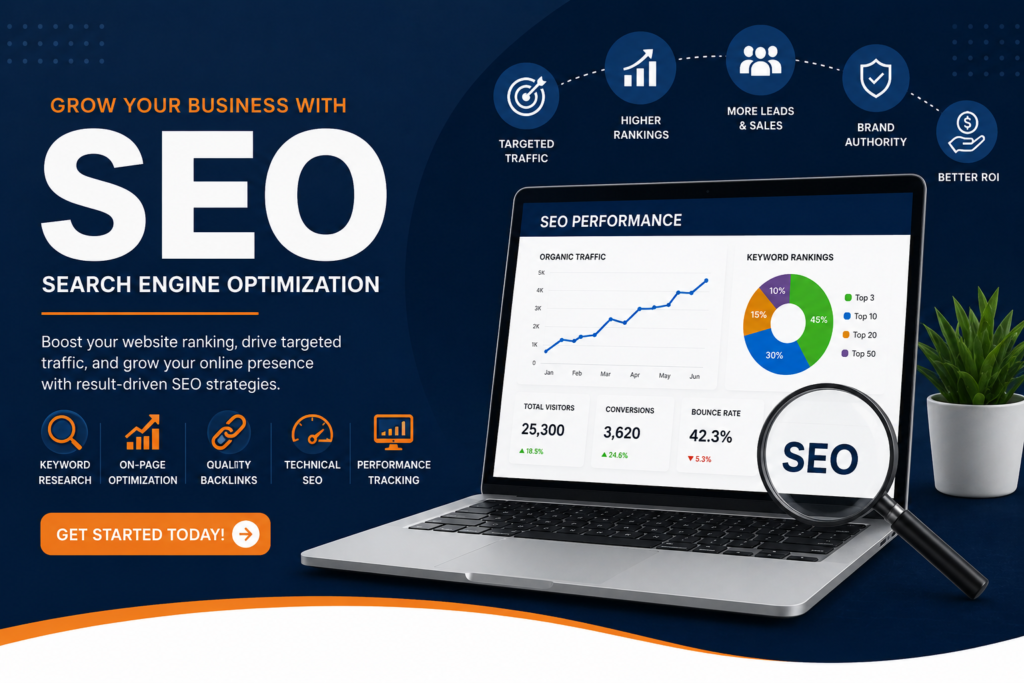
 Search Engine Optimization: The Key to Long-Term Online Success

Understanding SEO and Why It Matters Search Engine Optimization Introduction In today’s digital world, having a website is only the first step toward building a successful online presence. With millions of websites competing for attention, simply launching a website does not guarantee that potential customers will find your business. This is where Search Engine Optimization (SEO) plays a vital role. SEO is the process of improving a website’s visibility in search engine results pages (SERPs). When users search for products, services, or information related to your business, effective SEO helps your website appear higher in search results, making it easier for potential customers to discover your brand. Unlike paid advertising, SEO focuses on earning organic traffic, providing long-term benefits that continue to generate leads and sales over time. As search engines become more sophisticated, SEO has evolved beyond keyword placement. Today, it includes creating valuable content, optimizing website performance, improving user experience, and building authority through quality backlinks. Businesses that invest in SEO establish a stronger online presence, increase brand credibility, and attract highly targeted visitors who are actively searching for their products or services. Whether you own a small local business, an online store, or a large enterprise, SEO is one of the most cost-effective digital marketing strategies available. It helps businesses reach the right audience at the right time while supporting sustainable growth in an increasingly competitive online marketplace. What Is Search Engine Optimization (SEO)? Search Engine Optimization Search Engine Optimization is the practice of enhancing a website to improve its ranking on search engines such as Google, Bing, and Yahoo. The primary goal of SEO is to increase the quantity and quality of organic traffic by making a website more relevant, trustworthy, and user-friendly. SEO involves optimizing multiple elements of a website, including: Rather than focusing on a single factor, successful SEO combines technical improvements, high-quality content, and authority-building strategies to achieve long-term visibility. Why SEO Is Essential for Business Growth Search Engine Optimization Most online experiences begin with a search engine. Whether someone is looking for a nearby service, comparing products, or researching solutions, search engines are often the first place they turn. If your website does not appear in relevant search results, potential customers may never discover your business. SEO helps bridge this gap by improving your website’s visibility and connecting you with users actively searching for what you offer. Some of the biggest benefits of SEO include: Increased Organic Traffic Search Engine Optimization SEO helps attract visitors without paying for every click. By ranking higher for relevant keywords, your website receives consistent traffic from users who are genuinely interested in your products or services. Higher Brand Credibility Search Engine Optimization Users tend to trust websites that appear on the first page of search results. Strong rankings signal authority, reliability, and relevance, helping build customer confidence before they even visit your website. Better User Experience Search Engine Optimization Modern SEO focuses heavily on user experience. Fast-loading pages, mobile-friendly design, clear navigation, and valuable content not only improve rankings but also encourage visitors to stay longer and explore your website. Cost-Effective Marketing Search Engine Optimization Unlike paid advertising, SEO continues delivering results even after optimization work is completed. Although it requires time and effort, its long-term return on investment often exceeds many traditional marketing methods. Sustainable Business Growth Search Engine Optimization SEO generates qualified leads from people who are actively searching for solutions. This targeted approach leads to higher conversion rates and supports steady business growth over time. How Search Engines Work Search Engine Optimization To understand SEO, it’s important to know how search engines discover and rank websites. Crawling Search Engine Optimization Search engines use automated bots, often called crawlers or spiders, to explore websites across the internet. These bots follow links from one page to another, discovering new and updated content. Indexing Search Engine Optimization After crawling a webpage, search engines analyze its content and store it in a massive database known as an index. Only indexed pages are eligible to appear in search results. Ranking Search Engine Optimization Search Engine Optimization When a user enters a search query, search engines evaluate thousands of indexed pages to determine which ones provide the most relevant and useful answers. Ranking decisions are based on numerous factors, including content quality, keyword relevance, page speed, mobile usability, website authority, and overall user experience. Because search engine algorithms are constantly evolving, businesses must regularly update and optimize their websites to maintain strong rankings. Understanding Search Intent Search Engine Optimization Modern SEO is no longer about stuffing keywords into web pages. Search engines now prioritize understanding the intent behind a user’s search. Search intent generally falls into four categories: Creating content that matches user intent improves both search rankings and customer satisfaction. The Importance of Keyword Research Search Engine Optimization Keyword research is the foundation of every successful SEO strategy. Keywords are the words and phrases users type into search engines when looking for information, products, or services. Effective keyword research helps businesses understand: There are several types of keywords to target: Short-Tail Keywords Search Engine Optimization These are broad search terms consisting of one or two words, such as “SEO” or “digital marketing.” They typically have high search volume but also strong competition. Long-Tail Keywords Search Engine Optimization Long-tail keywords are more specific phrases, such as “best SEO services for small businesses” or “how to improve website rankings.” Although they have lower search volume, they often attract highly qualified visitors and deliver better conversion rates. Local Keywords Search Engine Optimization Businesses serving specific geographic areas should target location-based keywords, such as “SEO agency in Malappuram” or “digital marketing services near me.” These keywords help attract nearby customers who are actively looking for local solutions. A balanced keyword strategy combines short-tail, long-tail, and local keywords to maximize visibility while reaching different stages of the customer journey. Building a Strong SEO Foundation Search Engine Optimization Successful SEO begins with a solid foundation. Businesses should focus on creating high-quality content, understanding

Scroll to Top